Chefchaouen is the most photographed city in Morocco and possibly the most misunderstood. Most visitors come for the blue walls, take their photos and leave within a few hours. They miss almost everything that makes Chefchaouen worth visiting.
Yes, it is extraordinarily photogenic. The blue-washed walls and stepped streets of the medina are genuinely beautiful and the light in the morning and evening is something photographers chase from across the world. But Chefchaouen is also a real mountain town with a fascinating history, excellent hiking, the best kif culture in Morocco and an atmosphere completely unlike anywhere else in the country.
This guide is for the people who want more than just the photo.
THE BLUE .. WHERE IT COMES FROM AND WHAT IT MEANS
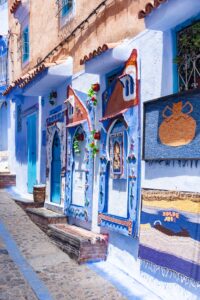
The blue of Chefchaouen is not a single shade. Walk through the medina and you will see everything from pale sky blue to deep cobalt to turquoise to indigo, often on the same street. The walls are repainted regularly by residents, each family chooses their own shade, which is why the effect is so varied and so beautiful.
The origin of the blue is debated. The most common explanation is that it was introduced by Jewish refugees who arrived from Spain in 1494 following the Reconquista, blue representing the sky and heaven in Jewish tradition. Others say the blue came later, introduced in the 1930s. Whatever the history, the effect is extraordinary and completely unlike any other Moroccan medina.
THE MEDINA .. HOW TO ACTUALLY EXPERIENCE IT
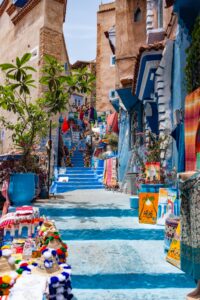
The Chefchaouen medina is small, smaller than Fes or Marrakech by a significant margin. You can walk from one end to the other in twenty minutes. This means you will run out of obvious things to do fairly quickly if you approach it as a list of sights to tick off.
The right approach is slower. Sit in the main square, Plaza Uta El-Hammam and have a mint tea. Walk the upper streets above the main tourist circuit where the blue walls continue but the souvenir shops disappear. Find the steep stairways that climb toward the Spanish Mosque above the town. Come back in the early morning before 8am when the light is best and the streets are empty.
Plaza Uta El-Hammam is the main square, the old kasbah on one side, the Grand Mosque on the other, café terraces all around. The kasbah is worth visiting for the small museum inside and the views from the tower. The square itself is the social heart of the town and worth sitting in for an hour watching local life.
The Spanish Mosque, a 20-minute walk up the hill above the medina, was built by Spain during the protectorate period and never used as a mosque, it functioned as a church for the Spanish community. Now abandoned, it sits on a rocky promontory with the best view of Chefchaouen and the Rif mountains. Go at sunrise or sunset. The walk up is steep but not difficult.
THE RIF MOUNTAINS .. THE REASON TO STAY MORE THAN ONE DAY
Most visitors to Chefchaouen come on a day trip from Fes or as a one-night stop. This is a mistake. The Rif mountains around the city are beautiful, accessible and almost completely unvisited by tourists.
The most popular hike is to the Ras el-Maa waterfall, a 30-minute walk from the medina along a river path through the hills. Beyond the waterfall the trail continues into the mountains, serious hikers can walk for days.
The valley of the Oued Laou, an hour by grand taxi from Chefchaouen, has swimming holes and riverside walking trails through farming villages. Completely off the tourist circuit.
Ask at your riad or guesthouse about guides for mountain walks. A local guide for a half-day hike costs around 200-300 MAD and is worth it both for navigation and for the access to places you would not find alone.
THE FOOD
Chefchaouen has good food and low prices. The mountain location means the local cuisine leans toward hearty, tagines with lamb or goat, lentil soups, fresh bread from the communal ovens.
The best restaurants are the small family-run places in the medina streets away from the main square. A full meal with tagine, salad and bread costs 40-70 MAD. The restaurants directly on the square charge more for significantly less atmosphere.
The market outside the medina walls has excellent fresh produce, the mountain climate produces good vegetables and the honey from the Rif region is among the best in Morocco. Buy it here rather than in the souvenir shops.
Kif / Cannabis, is openly sold and consumed in Chefchaouen and the surrounding Rif region. Morocco is the world’s largest producer of cannabis resin. While technically illegal, enforcement is minimal in Chefchaouen and the trade is an open part of local economic life. As a visitor, be aware of the legal situation and use your own judgment.
WHERE TO STAY
Chefchaouen has excellent guesthouses at very low prices. The medina is small enough that every location is convenient. A simple but clean guesthouse room costs €15-30 per night. A proper riad with a rooftop terrace and good breakfast costs €40-70.
Book in advance for summer weekends, Chefchaouen has become extremely popular with Moroccan tourists from the cities and good places fill up quickly in July and August.
PRACTICAL INFORMATION
Getting there: No train to Chefchaouen. CTM buses from Fes take around 4 hours, from Tangier around 3 hours, from Casablanca around 5 hours. Grand taxis from Tetouan take about 1 hour.
Getting around: The medina is walkable. Grand taxis for the mountains and surrounding area.
Best time to visit: April-June and September-October. July and August are very busy and hot. November-March is quieter and sometimes cold, the Rif mountains get snow in winter.
How long to spend: Minimum 2 nights. 3 nights if you want to hike in the mountains. One day is not enough, you will only get the photo.
Budget: One of the cheapest cities in Morocco. Guesthouse €15-30/night, good riad €40-70/night. Meals 40-70 MAD. Very affordable overall.
MARIA’S HONEST VERDICT
Chefchaouen is genuinely beautiful and genuinely worth visiting, but it rewards the traveler who stays longer than the Instagram algorithm suggests. The blue walls are real and they are extraordinary, especially in the early morning light. But the mountains above the town, the slower pace of life, the honest simplicity of the food and accommodation, these are what make Chefchaouen memorable rather than merely photogenic. Stay two nights minimum. Hike. Sit in the square without looking at your phone. You will understand why people come here and never quite want to leave.